Amplifying Opportunity: How Music Strengthens Communities
Big idea: Tennessee is building stronger communities—and a stronger economy—by treating music like essential infrastructure. State partners and local leaders are mapping music ecosystems county by county, then turning data into practical policy, programs, and funding models.
What’s happening statewide
- Music ecosystem feasibility studies are rolling out across Tennessee—ultimately touching ~87 counties. The goal: inventory assets, surface challenges, and produce actionable roadmaps—from workforce and venue needs to policy fixes and funding ideas. The process is community-based: roundtables with musicians, venues, universities, tourism, business, and civic partners. A new cohort model will help regions share wins and resources so communities don’t have to reinvent the wheel.
What the studies deliver
- A benchmark data picture of each local music economy (assets, gaps, economic output). A concise strategy report with ~30 recommendations communities can prioritize together. A shared framework that recognizes the full value chain: creation → production → distribution → audience.
Standout takeaways from the panel
- Data sparks policy wins. In Nashville, survey insights about parking burdens on working musicians helped catalyze a “Park & Play” program—free parking for union members performing at participating venues—and adjustments to time limits that conflicted with show lengths. The music economy is large—and often underestimated. One city’s total music ecosystem output topped $700M, far outpacing what traditional arts-only tracking captured. It’s a tale of two realities. A portion of creators do very well, but many juggle 3–4 side jobs with average incomes around $50K—reminding leaders that “industry success” doesn’t automatically equal community well-being. Visibility matters. Many assets sit in the creation bucket; communities need to grow distribution and consumption capacity (more rooms to play, rehearse, and be heard) to complete the loop. Government is a partner—but coalitions move faster. Where city capacity is limited, venue associations, musician unions, tourism, chambers, universities, and foundations have stepped in to lead and fund quick wins.
Funding what works
Communities are pairing public support with entrepreneurial approaches:
- Dedicated arts/music funds seeded by ticket surcharges or earmarked hotel/motel tax allocations. Film & festival programs inside city arts offices that also generate revenue. State-level Live Music funds (via the Tennessee Entertainment Commission) that need sustainable, non-appropriation funding—for example, a small arena ticket levy to support independent venues (the “farm system”). Private-sector partnerships—especially with companies that recruit talent to Tennessee for its creative culture.
What success looks like (near-term to long-term)
- Economic: measurable growth in music’s GDP contribution, creative-sector jobs, and small-business formation. Social: higher arts participation rates, stronger belonging and connectedness, and safer, more vibrant public spaces animated by music. Career pathways: musicians and music workers can build sustainable careers locally—whether gigging, teaching, producing, or running music-adjacent businesses. Retention & attraction: graduates and mid-career creatives stay because the ecosystem supports living, working, and creating—without leaving for larger markets. Collaboration at scale: cross-city coalitions keep meeting, measuring, and iterating, lifting the entire state.
Real-world challenges (and how leaders are addressing them)
- Ownership & accountability: Clarify who “owns” the plan; many cities are placing coordination in arts/culture offices while empowering coalitions to deliver. Expectations vs. bureaucracy: Government timelines are real; leaders set expectations, ship what they can (e.g., networking hubs, music councils), and keep larger infrastructure projects moving. Space to create: It’s not just stages—rehearsal and practice space are essential. Cities are exploring community centers and public facilities as low-cost solutions. Narrative change: Music isn’t a niche—it’s workforce, tourism, small business, and placemaking. Telling that story unlocks broader support.
Rural lens: amplifying opportunity outside the metros
- Start with what you have. Libraries, schools, churches, and community halls can host rehearsals, lessons, and showcases. Map assets and connect them. Act as a convener—once the scene knows itself, momentum (and small wins) compound. Leverage grants & cohorts. Tap statewide programs and peer communities for templates you can adapt quickly. Champion local storytellers. Appoint community captains to keep information flowing and celebrate wins that shift the narrative from “talent leaves” to “talent can grow here.”
Why this matters
Music isn’t just entertainment—it’s a strategy for economic growth, talent retention, public health, youth development, and civic pride. Tennessee’s data-driven, community-first approach is showing how to turn culture into capacity—and turn local creativity into shared prosperity.

Fayetteville Main Street Announces Heather McCormick as ... Fayetteville Main Street is pleased to announce that Heather McCormick has accepted the position of Executive Director, beginning Octobe...
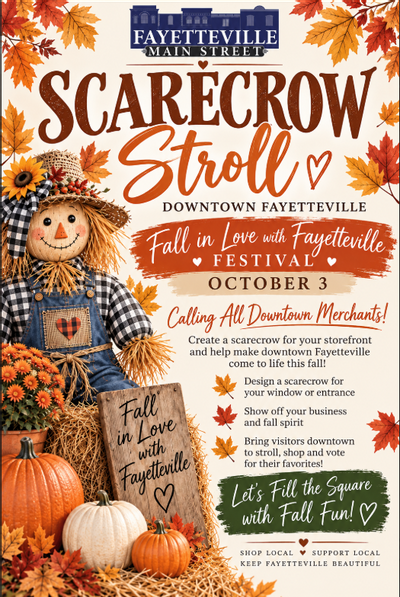
Scarecrow Stroll📣 Calling all of our Downtown Fayetteville merchants! 🍂 It’s time to get creative for our Scarecrow Stroll! 🌾 Create a scarecrow for you...

Meet the Member: Tina Freeman of The Hair AcademyMeet the Member: Tina Freeman of The Hair Academy For the past 25 years, Tina Freeman has dedicated her career to helping others discove...
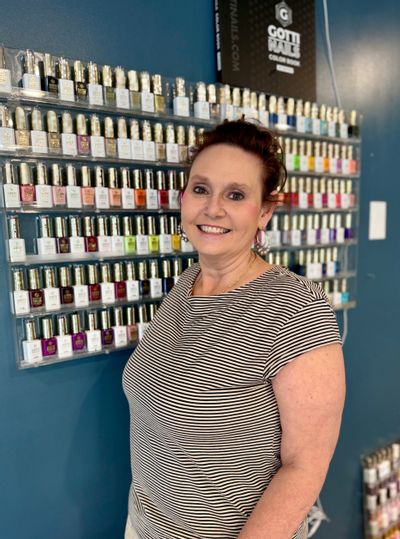
Meet the Member: Stacy Allen of Studio 431 Wellness SpaAs the owner of Studio 431 Wellness Spa , Stacy has built her business around the belief that self-care is an essential part of overall ...
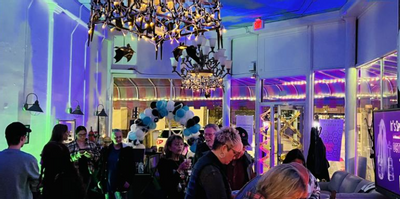
Spirits with the Spirits 2026Read More
Oct 24, 2026
7:00 PM CDT
100 Main Avenue N, Suite 1A
Fayetteville, TN 37334